English
 Română


 View larger
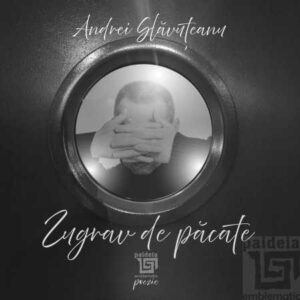
Zugrav de păcate - Andrei Slăvuțeanu
Andrei Slăvuțeanu
- Write a review
"Painter of Sins" by Andrei Slăvuțeanu is a profound and uncensored foray into the abysses of the human soul. More than a simple collection of poems, the book presents itself as a fragmented confession, an act of "legitimate defense" in the face of overwhelming silences and existential uncertainties. The author himself defines his approach not as "poetry as a form", but as "poetry beyond the soul"
2663P
New
Central Themes
The work is built around recurring thematic cores, which explore the human condition from a subjective and often painful perspective.
Existential Anxiety and Identity Crisis: The lyrical self is in a permanent search and questioning of the self. Lyrics such as “I am... / a hasty gesture in a universe / that has lost itself, / in me” or the rhetorical question “in whose image and likeness do I live my life...?” reflect a profound alienation and a sense of loss. The self is defined by absence (“I am the absent one you look at”) and by a constant struggle with the inner void.
Time, Memory and Forgetting: Time is a palpable presence, often perceived as hostile, fluid or fractured. It is a “forgiven wasteland”, a “fresh wound in the twilight of truth”. Memory is described as a “subjective history”, and forgetting becomes a defense mechanism, a painful but essential necessity for survival. The past, present and future merge into a dull nostalgia, in which the present “has passed before you have lived it”.
Silence as a Form of Expression: Silence is not the absence of sound, but a language in itself, often more powerful and painful than any word. It is personified, capable of carrying burdens or screaming in the soul. Poems are born from silences that “cannot be carried within you without turning into poetry”, thus becoming the voice of the unspoken.
Love and Human Relationships: Love appears in various forms: as a memory (“I love you like a memory”), as a paradox (“everything / divides into two, / into one / and still one / gives me”), or as a fragile embrace in a “blind future”. Relationships are marked by distance, regrets and failed communication, captured in images such as “we no longer speak / in the midst of sporadic cardinal points”.
Metaphysical Imagery and Sin: The title itself, “Painter of Sins”, suggests a constant concern for the imperfect human condition. The volume is sprinkled with religious images (angels, Golgotha, crucifixion, sin), but these are emptied of their dogmatic meaning and reinvested with a personal, existential significance. The angels have broken wings, are "for sale" or "went crazy in vain", symbolizing the fall, the loss of innocence and disillusionment.
Poetic Style and Language
Andrei Slăvuțeanu's style is distinctive for its minimalism and emotional impact.
Fragmentarism: Many poems are short, aphoristic, like fragments of thought or snapshots of a state. This structure reflects the discontinuity of consciousness and the difficulty of formulating a coherent discourse about pain.
Direct and Sincere Language: The author avoids excessive stylistic artifices, opting for a direct, almost brutal expression: "my elbow hurts, / from everything that flows syrupily", "I hate sincerely, from the heart, endlessly..." .
Surreal Images: Inner reality is rendered through unexpected metaphors and powerful visual images: “the day I drowned in the sun”, “coffee suffocates / in the transparent labyrinth”, “the mirror hates the maturity of blood”.
Juxtaposition of the Sacred with the Profane: The juxtaposition of transcendental elements with everyday ones (coffee, cigarette smoke, city streets) anchors the inner turmoil in a recognizable reality, creating a strong contrast and a sense of universality.
Structure of the Volume
The book is divided into seven poetic cycles: Subjective, Paper Shards, Dead Angle, The End Continues, Without... Title, Gone... Nowhere and Painter of Sins. Each section approaches the central themes from different angles, creating a trajectory that starts from a deeply personal introspection (“Subjective”) and expands towards a universal meditation on the human condition, nonsense and the possibility of finding meaning in the absence of certainties.
In conclusion, “Painter of Sins” is a lyrical journal of vulnerability, a courageous exploration of the dark areas of being. It is a book that does not offer answers, but validates questions, transforming pain, loneliness and regret into a sincere and visceral art form.
| Author | Andrei Slăvuțeanu |
| Publication date | 2025 |
| Format | 200 x 200 mm |
| No. of pages | 200 din care 31 ilustrații color |
| Collection | Literaturi |
| Gen | Publicistica |
| Subgen | Poezie |
| Limba | Romana |
| Tip format | Fizic |
| ISBN | 978-630-362-008-4 |
Zugrav de păcate
în pregătire„Zugrav de păcate” de Andrei Slăvuțeanu, este o incursiune profundă și necenzurată în abisurile sufletului uman. Mai mult decât o simplă colecție de poeme, cartea se prezintă ca o confesiune fragmentată, un act de „legitimă apărare” în fața…